
Gokul Anugrah
You are here
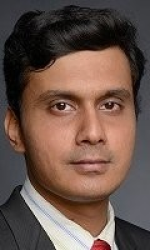
Gokul Anugrah is a postdoctoral researcher in the Computational Biomechanics group at Michigan State University. He earned his Ph.D. in Mechanical Engineering from the University of Kentucky, where his research centered on direct numerical simulation (DNS) of pulsatile turbulent flow in curved geometries inspired by the human aorta, with applications to cardiovascular disease modeling. His doctoral work included patient-specific simulations of aortic dissection built from CT/MRI reconstructions and validated against 4D-flow MRI velocity fields, with a focus on hemodynamic quantities such as wall shear stress and oscillatory shear index.
Gokul began his career in high-speed aerospace CFD, working on nozzle flows, wing aerodynamics, and supersonic fluid-structure interaction. The high-fidelity numerical methods and high-performance computing tools developed there now underpin his work in biomedical flows, and the shift from aerospace to cardiovascular problems has been a natural one: both involve complex, unsteady flows interacting with deformable structures. He also develops machine-learning surrogate models that predict hemodynamic fields at a fraction of the cost of full simulations, making large parameter studies more practical.
At MSU, Gokul will work on cardiovascular devices, including the left ventricular assist device (LVAD) and transcatheter aortic valve replacement (TAVR). His research will focus on surrogate modeling and, in the longer term, fluid-structure interaction (FSI) simulations of these systems. He holds an M.Sc. in Computational Mechanics from the University of Duisburg-Essen, Germany, and a B.Tech. in Mechanical Engineering from the National Institute of Technology, Warangal, India.
Developed by DECS | EGR | MSU | Contact
Us
| Privacy Statement
© Michigan State University Board of Trustees. East Lansing, MI 48824
Visit msu.edu